A few years ago I visited a food manufacturing site that used more handwear covers in a shift than I had in a lifetime. Every station had a box of nitrile handwear covers, and every hour, drivers swapped them out as an issue of protocol. The plant ran around the clock. By the end of the week, they had a roll-off container loaded with made use of PPE Gloves that no one wanted to discuss. Safety and cleanliness were perfect, yet the waste line was the elephant in the room. That go to sparked a simple concern I have actually brought into loads of manufacturing facilities, laboratories, and warehouse floorings given that: suppose the glove is not completion of the story?
If you've worked in environments where PPE is nonnegotiable, you recognize the rubbing between conformity and sustainability. A circular economic situation version for PPE does not ignore that truth, it works with it. The goal is simple, even if the execution is not: maintain individuals risk-free, prevent cross-contamination, and change what used to be single-use into a handled, traceable circulation of materials that return worth. That worth may come as price decrease, lower disposal fees, lower Scope 3 exhausts, or hard-to-quantify a good reputation with staff members and consumers. Done right, it supplies a rare trifecta: safety and security, cost savings, and stewardship.
Where the waste is hiding
Gloves dominate the conversation due to the fact that they control the container. In fields like food processing, vehicle, biotech, and electronic devices setting up, PPE gloves are transformed often forever factor. Oils, powders, and microscopic particles do real damage. Level producing sterilized components, a solitary fragment can ditch a batch. Raw matters vary extensively by sector, yet I frequently see glove modification prices of one to 3 sets per hour per driver. Multiply by shifts and head count, and it prevails to hit six to 8 figures in yearly glove consumption throughout a multi-site organization.
Other PPE, from sleeves and bouffants to masks and boot covers, add also. Yet handwear covers provide one of the most regular stream with the tightest requirements, making PPE gloves recycling the sensible access point. They have foreseeable polymers, high volumes, and fairly reduced mass each, which, strangely enough, makes logistics both much easier and trickier. Less complicated due to the fact that the product is consistent, more difficult due to the fact that the sheer number of products suggests any type of tiny inadequacy multiplies.
The waste is not just physical. It sits in procurement premiums for virgin products, costs for disposal, and hidden labor costs around frequent restocking and bin handling. If you're tracking Environmental responsibility metrics, there's also the upstream impact tied to generating numerous small plastic items that see minutes of use. A circular economic climate model does not eliminate these influences, but it can bend the curve.
Safety, then circularity
The first rule is nonnegotiable: safety and item honesty precede. Cross-contamination avoidance lives at the core of any severe PPE program. If the cleaning or reusing loop introduces real risk, the program will certainly never ever scale, neither must it. The method is to match product streams to risk rates, and to treat each site as an unique puzzle.
In food and pharma, a solitary handwear cover discarded in a raw zone can not combine with one from a high-care zone. In electronic devices assembly, a handwear cover that grabbed conductive fragments offers a various danger profile than one made use of for packaging. In labs, organic or chemical exposure can disqualify entire streams from recycling. That's why successful programs start with a segregation map, not a marketing motto. You define streams by what they touched, not by what they are made of.
I have actually seen plants try a one-bin-fits-all technique and desert it within months. The better course utilizes color-coded, clearly identified containers and easy, visual basic work. Operators must be able to make the ideal option in 2 seconds. The point is not excellence. It is building a system that captures 90 percent of recoverable material without trapping individuals in decision paralysis. Beginning with one or two streams where risk is reduced and quantity is high, after that expand.
Cleaning, reusing, or both
There are two main methods to maintain gloves in a loop: glove cleansing for reuse and products recycling. They aren't compatible. They solve different problems for different environments.
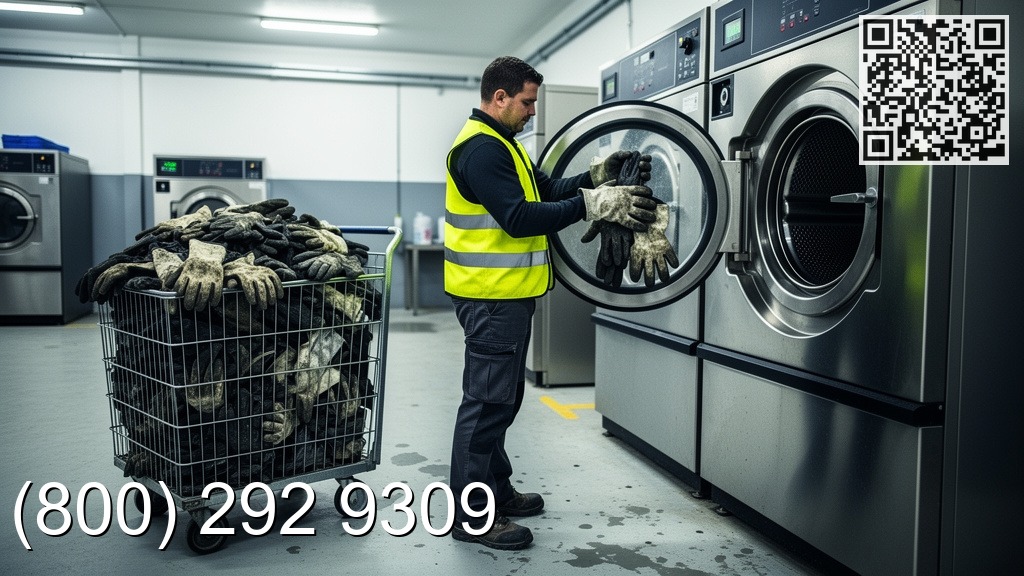
Glove cleansing, which might include cleaning, drying, and confirmed quality checks, benefits durable handwear covers, cut-resistant handwear covers, or specialty gloves created for numerous usages. Think of nitrile-coated work handwear covers in automotive subassembly or thicker chemical-resistant handwear covers in upkeep areas. The technique is not concerning sending thin non reusable gloves through a wash, it is about extending the life of handwear covers built for it. With tight recognition, you can push service life from, state, one week to three or four, while keeping hold, tensile stamina, and sanitation requirements. That requires a durable evaluation protocol. Glove cleaning, when done by a proficient service provider, can additionally consist of traceable sets, so you can pull a whole lot if there's an issue.
Materials reusing, on the various other hand, handles high volumes of single-use nitrile or latex. These handwear covers are unclean for reuse on hands. They are collected, verified non-hazardous, and refined right into second products. Common results include polymer blends for industrial products such as mats, composite lumber, or injection-molded items that tolerate mixed polymer properties. The worth per kilo is low compared to virgin polymers, but the worth to a plant comes from avoided disposal expenses, ESG gains, and in many cases, engagement in take-back programs that supply discounts or credits.
Hybrid designs are becoming a lot more common. As an example, a facility might launder multiple-use cut handwear covers made use of in setting up, while sending non reusable nitrile gloves from product packaging locations to a specialized recycler. The approach right here is to optimize the recuperated fraction without compromising any type of line's hygiene or security needs.
The situation for beginning tiny and measuring like a hawk
The fastest way to kill a circular program is to scale a poor presumption. The second fastest is to miss the math. Pilot projects, done with a predisposition for data, protect you from both.

A pilot has 3 tasks. Initially, verify that the program does not threaten security or quality. Second, confirm that it fits into the day-to-day rhythm of operations with very little rubbing. Third, capture clean information so the ROI calculator informs a legitimate story.
That calculator should not be home window clothing. It needs to show your truths, not a vendor's average. Handwear cover expenses differ by region and by polymer. Disposal charges swing by area and by the nature of your waste agreement. Labor time for collection and sorting looks different in a lean plant versus a stretching website. So, construct the calculator to take care of varieties and scenarios. You want to see what takes place if handwear cover prices rise 15 percent or if haul-away costs go up after a contract renewal. You wish to see the impact of contamination rates on the return of recyclable product. If your legal team bans recycling of any product from a clean and sterile zone, the calculator must know that too.
A common pilot may target a solitary high-volume division for 8 to twelve weeks. Standard your handwear cover usage, waste weights, contamination rates in bins, and near-miss records related to PPE adjustments. Train operators with basic aesthetic signs and a few minutes of context regarding why the program exists. After that watch. Walk the flooring. Ask supervisors what produces rubbing. Inspect the bins for mis-sorts and foreign materials. Change your bin positioning, tags, and pick-ups. The little tweaks below are gold. Moving a bin 10 feet can raise capture rates by dual digits.
Choosing partners and recognizing what to ask
Few companies intend to construct an internal handwear cover recycling plant. Choosing the right companion matters more than the logo on the bins. Try to find a supplier that has recorded handling methods, can clarify their downstream companions, and agrees to stroll your site with a crucial eye. If they can not speak with contamination circumstances for your classification of threat, keep looking.
I've dealt with groups that brought in a business like Libra PPE Recycling since they had a mix of offerings across products reusing and took care of collection, together with compliance documentation that pleased hesitant quality leaders. The brand name matters much less than the information: chain of guardianship, reporting transparency, batch testing, and a clear response to where your product pursues it leaves the dock. If a service provider hedges or gives vague answers regarding end markets, that's a problem.
For handwear cover cleansing suppliers, insist on top quality requirements that mirror your interior criteria. Ask how they track and eliminate handwear covers that fall short assessment. Inquire about contraction prices and just how they quantify wear. For recycling suppliers, review their approval criteria by stream, their contamination limits, and their rejection process. The very best companions will certainly assist you create your interior partition to make sure that your material meets their requirements, not simply deliver you boxes and desire you luck.
The quiet power of design for circularity
The cleanest kilogram of recycled product is the one you never ever had to clean up. Product style options echo loudly in downstream circularity. If you can specify a glove product that is more readily recycled in your geography, you improve your odds. If you can systematize across a website or an area on a solitary polymer where feasible, you streamline sorting and reinforce your stream. This is not constantly possible. Operators have choices, irritants exist, and tactile needs vary by task. Still, the extra you combine specs without jeopardizing efficiency, the far better your circular economic situation model performs.
Packaging matters also. Bulk-packed gloves in recyclable cartons minimize upstream waste and simplify disposal. Clear labeling that makes it through humidity and taking care of minimizes confusion. Also the design of your collection terminals affects capture prices. If you've ever watched someone think twice in between 2 bins while handling a hairnet and a pair of gloves, you've seen the micro-moments that make or damage a program.

Compliance and the risk conversation
Circularity without conformity is a responsibility. Your EHS and QA groups need to co-own the program with procedures. They will flag circumstances where recycling is not permitted, no matter how compelling it views paper. Biological hazards, solvent exposure, or hefty steels can invalidate entire waste streams from glove recycling. The response is not to push past those red lines. It is to map them and construct the program around what is really secure and compliant.
Documentation is your close friend. Standard procedure for collection, signs that matches SOP language, and training documents all minimize friction with auditors. If you operate under GFSI plans in food, or under ISO 13485 in clinical tools, straighten your program paperwork to those frameworks. The initiative settles when your auditor asks just how you regulate the danger of reestablishing polluted materials and you can reveal a circulation layout that ends at a recycler, not back on the line.
Costs, cost savings, and where money hides
Executives will ask, does this save cash or expense cash? The sincere response is, it depends. The most effective programs mix straight financial savings with defensible indirect benefits.
Direct financial savings often originate from:
- Reduced spend on disposal if you draw away substantial weight or quantity from general waste streams Avoided acquisition of some recyclable gloves as a result of extensive life with confirmed glove cleaning
Indirect benefits include lowered danger of stockouts by smoothing demand, softer but genuine boosts to worker involvement, and less complicated development on Environmental responsibility metrics, which influence customer audits and, in some markets, proposal qualification. Scope 3 accounting is still developing for lots of companies, yet lots of purchase groups now prioritize vendors that can show a credible Circular economy design, which can affect earnings indirectly.
I have actually seen payback durations varying from six months to two years for multi-site programs. The difference depends upon contamination prices, supplier pricing, and inner logistics. The ROI calculator need to design not just ideal case however conservative circumstances. If the program removes the bar also when presumptions lean careful, you have a winner.
A functional path for implementation
You do not require a sustainability department with a loads personnel to do this well. You need a cross-functional group that respects each various other's constraints. Normally, operations possesses the floor, QA or food safety and security has risk gateways, EHS makes sure conformity, procurement manages vendor alignment, and sustainability tracks metrics and reporting. One project manager, even part-time, can keep momentum.
Start with a short diagnostic. Map glove moves throughout areas. Estimate quantities for every location, watch exactly how commonly containers fill, and capture harsh contamination prices by looking in. Sit with line leads and ask what would make sorting simple. You'll listen to insights that never turn up in a policy. Someone will mention that a container requires a foot pedal, or that the existing container remains in a walkway that obtains obstructed during changeovers. These information matter.
Select one or two streams for stage one, ideally high volume and low danger. Pick a partner who will co-create the process, not just deliver you containers. Stand the program for 8 to twelve weeks. Track weights, denial rates, and any kind of safety and security cases, though in a properly designed program that event count ought to be no. Share the information once a week with the team. When operators see the numbers, involvement tends to improve, particularly if you give thanks to divisions that hit capture targets.
When you scale, do it in waves. Each wave ought to bring a lesson you have already absorbed. Do stagnate into a high-care area until you can reveal auditors and leaders that the earlier areas ran cleanly. The reputation you integrate in very early phases purchases you count on later.
What success resembles on the floor
Walk the floor of a plant with a fully grown circular PPE program, and you will observe silent clues. Collection stations stand where they should, ideal next to the handwash or gowning locations. Tags are clear, not cluttered. A loader can toss handwear covers into the best container without breaking stride. Supervisors state the program in daily huddles only if there is an adjustment or a win to share. Nobody is chasing the bins, the bins are meeting the people.
You will additionally see that the program does not attempt to be a hero in areas where threat or regulation claims no. That humbleness maintains the core running efficiently. Not every glove gets recycled, and that is fine. The point is to catch what can be caught, not to act that absolutely no waste is 5 mins away.
The reporting side informs its own tale. Monthly control panels show kgs diverted, capture rates by area, denial rates, and price impacts. Some teams include a simple statistics like handwear covers diverted per shift, which makes the information relatable. If you collaborate with a supplier like Libra PPE Recycling or a comparable companion, you additionally get documents of downstream processing and, sometimes, certifications of recycling that satisfy internal and exterior stakeholders.
Common risks and how to sidestep them
The most common failing mode is overcomplication. More containers do not equal extra circularity. If your system requires drivers to pick among 5 streams for PPE gloves, you will certainly obtain noise, not signal. Keep it straightforward until actions is ingrained.
The 2nd risk is treating the program as a single launch as opposed to a managed process. Team turn over, line modifications, and seasonality will erode performance unless a person owns maintenance. Light-touch administration works: a quarterly review, quick refreshers during onboarding, and periodic audits of container contents.
Third, mismatch in between messaging and truth. If you inform people every handwear cover obtains turned into a shiny new item and then they see declined containers getting landfilled, count on collapses. Establish assumptions truthfully. Clarify contamination limits and why some product does not make the cut. A lot of drivers obtain it. They value being dealt with like adults.
Finally, overlooking the upstream purchase lever wastes leverage. If your business purchases ten various glove SKUs that do essentially the same job, consolidation can enhance your reusing program's pureness and reduce procurement churn. Line up providers with your round goals. Some will adapt, others will certainly not. The marketplace has room for those who do.
Technology assists, however never replaces good design
There is rate of interest in wise containers, weight sensing units, and digital tracking. These can include worth, specifically at range. I'm a follower of straightforward tech that lowers hand-operated tallying and feeds the ROI calculator exact information. Simply beware of adding gadgets to make up for bad placement or confusing signs. A badly put bin with a sensing unit is still a terribly put bin.
On the materials side, advancements in polymer sorting and handling remain to open up doors. Mixed streams that once had little value can now discover a home in consumer goods. Handwear cover makers are likewise explore formulas https://pastelink.net/mpnl4j77 that maintain efficiency while alleviating end-of-life handling. Maintain your perceptive, yet do not wait on excellent technology. The majority of sites can divert a purposeful share of PPE today with existing methods.
Culture, satisfaction, and the why
Numbers matter, yet society carries the program across months and years. Individuals who wear PPE twelve hours a day see when management takes the waste problem seriously. I have actually seen drivers recommend tweaks that defeat any kind of professional's suggestions. Provide a network and credit history. Celebrate the straightforward landmarks, like striking a 70 percent capture rate in a department that began at 30. Post an image of the initial pallet of recycled material leaving the plant. These are small routines, yet they remind people that the glove's story does not finish in a bag.
There is satisfaction in getting this right. PPE has to do with securing individuals. Expanding that protective frame of mind to the setting is not a stretch. It really feels coherent. It coincides discipline put on a new frontier of responsibility.
Bringing everything together
A circular economy model for PPE is not a single program. It is a way of handling flows that respects security, treats waste as info, and equates that details into worth. It starts with honest mapping of where your PPE goes, then builds sensible courses to recover some of that worth, whether through handwear cover cleansing or materials recycling. It depends on companions who can record their processes and on interior groups who have the everyday choreography. It thrives on little style choices that make the appropriate actions very easy and the wrong habits hard.
If you are simply starting, pick one area and one stream. Develop a modest ROI calculator with your numbers. Entail QA early. Ask a service provider like Libra PPE Recycling, or an additional reputable partner, to assess your strategy and poke openings in it. Run the pilot, discover strongly, and scale in waves. Respect the restrictions imposed by cross-contamination prevention, and carry your aspiration where the danger is reduced and the quantity is high.
The plant I visited years ago ultimately constructed a program like this. They did not struck no waste, and they really did not need to. They cut glove-related garbage dump weight by almost half in the initial year, minimized disposal charges, and developed a story their customers valued. Much more notably, the program slotted right into the way people worked. Operators relocated readily, picked the appropriate bin, and got back to the task that mattered. That is the hallmark of a round system that is constructed to last: it serves the people initially, after that the spreadsheet, and in the process the earth advantages too.
Libra Industries Inc
1435 N Blackstone St, Jackson, MI 49202
+15177875675
| Place ID | ChIJt_HMH44vPYgRNbiD22DpHYo |
| CID | 9952367353767639093 |
| Business Profile ID | 6301257705288912858 |
7H9Q+2G Jackson, Michigan
| Coordinates | 42.26760060, -84.41112540 |
 Ask ChatGPT
 Ask Grok
 Ask Perplexity
 Ask Claude
 Ask Google AI
 Ask You