Personal safety tools is meant to protect people, not bewilder waste containers. Yet in lots of centers, PPE Gloves, gowns, and masks leave the building after a solitary shift and head straight to landfill. I have actually been in plants where glove barrels fill up faster than scrap totes, and the buying team groans as pallets of fresh boxes roll in. On the other hand, sustainability objectives rest stalled, and health and safety leaders worry about any type of program that seems like "reuse." The doubt makes good sense. It's additionally solvable.
PPE gloves recycling and reuse has actually moved from speculative to practical in the previous few years. Programs can satisfy rigorous health criteria, keep budgets intact, and reveal quantifiable ecological responsibility. The difficulty is less regarding the innovation and more regarding consistent misconceptions that keep groups from attempting. Let's unpack the most typical ones, drawing from actual implementations in food, vehicle, pharma, and heavy manufacturing.
Myth 1: "Recycled handwear covers are hazardous, full stop."
Safety is the first filter for any PPE decision. Nobody wants to trade a cut or chemical burn for an environmental win. The nuance is that not all gloves are prospects for reuse, and not all tasks need "fresh-out-of-the-box" whenever. The far better strategy is to sector glove usage by threat, then use a cleaning and screening routine where it fits.
In managed settings like sterilized fill lines or cytotoxic handling, disposable gloves continue to be single-use. Period. For non-sterile cleanrooms, logistics, welding preparation, basic setting up, paint masking, and numerous maintenance tasks, reuse can satisfy or exceed safety demands if particular problems are met. You need verified handwear cover cleaning backed by recorded biological reduction, recurring chemical testing suitable to your industry, and a strict cross-contamination avoidance strategy. Modern laundering systems use tracked batches, managed cleaning agents, high-temperature cycles, and post-wash assessment that extracts microtears. The result is a handwear cover went back to solution only if it passes both visual and stamina checks.
I have actually seen teams bring their hesitant operators right into the recognition phase. Absolutely nothing changes minds quicker than side-by-side tensile examinations and cut resistance dimensions. If a program denies any type of glove with jeopardized covering or flexibility, the process secures both hands and the brand. Security remains the gatekeeper, not an afterthought.
Myth 2: "Recycling PPE just makes sense for huge corporations."
Volume aids, however it isn't the only bar. Mid-sized plants typically see surprisingly solid results because they have actually focused handwear cover types and predictable work. The secret is to start where product flows are clean and consistent. As an example, a vehicle parts plant with 350 staff members rerouted only its nitrile PPE Gloves from assembly and examination lines right into a reuse and reusing stream. By standardizing on two SKUs and assigning plainly labeled collection factors, they reduced virgin glove purchases by about 35 percent and lowered landfill pulls by a whole compactor per quarter.
If your group believes it's "also tiny," map out just one location. Pick a zone where the gloves don't speak to oils, solvents, or biologicals, and where task tasks are stable. That cell-level pilot can show out the logistics and cost without betting the center. Once it's secure, you can roll right into higher-volume locations. Programs like Libra PPE Recycling are created to right-size service regularity and coverage, so you aren't paying for underutilized pick-ups or complex changeovers.
Myth 3: "Glove cleaning is primarily washing and really hoping."
The early days of reuse had a Wild West feel. Bags of handwear covers went into generic washing cycles and returned wholesale. That technique should have the apprehension it got. The fully grown variation looks very different: identified batches, chain of wardship, presort by dirt type, cleaning agent chemistries customized to polymer households, drying out criteria that secure coverings, and post-clean examination that makes use of tension and flex examinations, not just eyeballs.
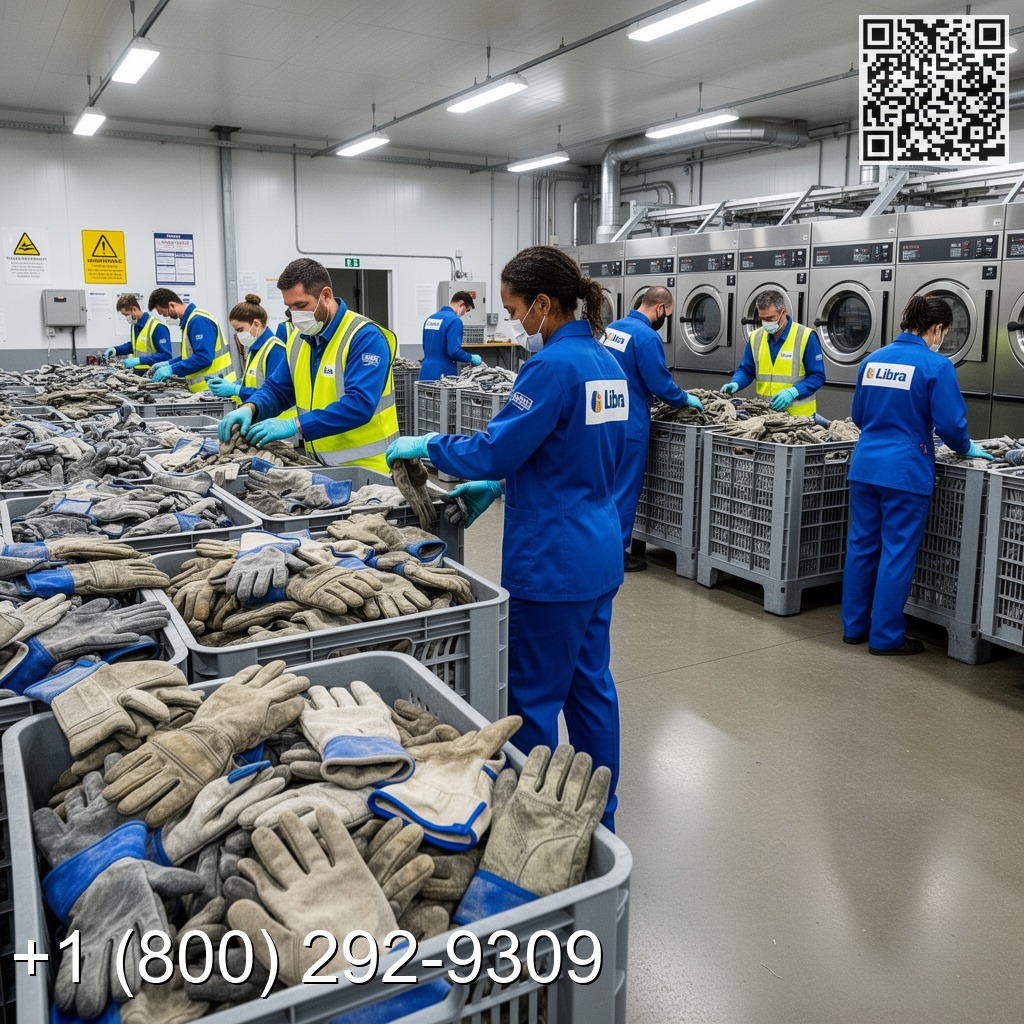
In one program I observed, liners and coated gloves were checked by lot, washed in fractional tons, dried out at reduced warmth to preserve nitrile bond, after that sent out through an LED light table that highlights thinning in high-wear areas. Rejected pairs were granulated and diverted to downstream material reuse, while accredited pairs were rebagged by size and great deal for traceability. Documents revealed log reductions for microorganisms and residue measurements for common impurities. You wind up with a handwear cover that is tidy in verifiable terms, not just visually.
For anybody assessing handwear cover cleaning, request for the recognition file. You desire the procedure map, the examination approaches, and the approval requirements. If a vendor hand-waves via those information, maintain looking.
Myth 4: "Cross-contamination will certainly spiral unmanageable."
The anxiety is reasonable. Handwear covers go anywhere, touch whatever, and traveling in pockets. Without discipline, reuse can move dirt from one cell to an additional. The fix is to treat the collection and return loophole with the same severity you bring to device control.
I like to start with a contamination matrix. Detail your zones and the impurities of worry, from machining oils to flour dust to material beads. Color-code what can cross zones and what can not. Many centers end up with an environment-friendly zone where reuse rates, a yellow zone that needs additional bagging and labeling, and a red area where handwear covers stay single-use. Supply clearly classified bins, preferably lidded, at the point of usage. When handwear covers leave the flooring, they travel in sealed containers with area labels. When they return, they're provided by zone also. If you're making use of a companion like Libra PPE Recycling, ask them to mirror your zoning in their set monitoring. The concept is easy: handwear covers used in paint prep don't head back into electronic devices assembly, and vice versa.
Operators need simple regulations they can use without thinking. Maintain signage short, train managers to model it, and run spot checks. Over time, combined loads fade due to the fact that individuals see the reasoning and the advantages. When people observe they're getting "their" handwear covers back, sized and sorted, buy-in improves.
Myth 5: "It costs more than getting new."
On paper, some disposables look less costly per set, specifically if you're getting containers at quote prices. The hidden costs sit in waste hauling, storage space, stockouts, and time lost switching gloves frequently. Plus, longevity on numerous covered multiple-use designs has enhanced to the factor where one handwear cover can do the work of four or 5 single-use options, even after laundering.
The smartest way to cut through the fog is to run an ROI calculator with your own numbers. Consist of acquisition cost per glove, average sets eaten each per week, waste disposal prices per heap, carrying frequency, time spent on glove changeovers, and any high quality rejects linked to handwear cover failure. After that look at the reuse program's service fees, loss prices, and anticipated cycles per handwear cover prior to retired life. Good programs report cycles per whole lot, so you understand whether you're getting 2 turns or eight.
Here's what I see typically: a facility investing 160,000 dollars every year on disposables shifts half its jobs to a launderable handwear cover. Also after service charge, total spend visit 15 to 25 percent, with waste prices down another 5 to 10 percent. Your mileage will vary, yet the workout dispels the myth that sustainability have to cost more.
Myth 6: "We'll never hit our sustainability targets with handwear covers."
One category seldom moves a corporate statistics by itself, yet gloves punch above their weight. They are high-volume, low-weight items that accumulate over a year. In one warehouse, just diverting handwear covers and sleeve covers from garbage dump reduced complete waste by 8 percent, enough to open a greater diversion tier that leadership had actually been chasing after. Environmental responsibility isn't practically carbon accounting. It has to do with getting rid of rubbing for the people doing the work, after that stacking outcomes across categories.
PPE gloves recycling plugs neatly into a circular economic climate version. After several cleaning cycles, gloves that stop working assessment can be refined for materials recovery, depending upon the polymer. It won't turn nitrile back into nitrile gloves in many cases, yet it can end up being commercial products or energy feedstock where permitted. That hierarchy of reuse first, after that reusing, retires the item responsibly and makes reporting truthful instead of aspirational.
Myth 7: "Adjustment will certainly disrupt the line and aggravate operators."
If you present reuse without listening to the team, they will inform you by stuffing any type of glove right into the nearby container. The antidote is operator-centric design. Begin by strolling the line and enjoying exactly how handwear covers get utilized, switched, and thrown out. If the collection container sits 20 steps away, people will pitch handwear covers into the closest trash bin. Relocating the container to the factor where gloves come off changes behavior overnight.
I have actually seen hand device darkness boards put beside glove return containers, so the act of storing a device reminds the operator to stow handwear covers also. An additional technique is to provide a clean starter collection each with name or team labels, after that restore by size. People take better care of gear they feel is designated to them. The return procedure ought to be as easy as tossing into garbage, just with a cover and label. Maintain the routines brief and respectful of takt time. When managers sign up with the comments loop, you'll hear about any pinch factors within a week.
Myth 8: "Auditors will reject it."
Auditors dislike surprises and undocumented processes. They do not dislike well-controlled, confirmed systems that decrease threat. If anything, auditors appreciate when a facility can show control over PPE lifecycle, from issue to end-of-life. The concern is to document. Compose a simple SOP that covers eligible zones, collection requirements, transportation, cleaning up specifications, acceptance requirements, and denial handling. Maintain the information easily accessible: cycles per batch, rejection rates, and deposit testing results.
For food and pharma, loop in top quality early. Obtain buy-in on the examination approaches for glove cleansing and on the aesthetic examination requirements. Your high quality team will likely tighten limits and add routine confirmation swabs. That's good. More powerful guardrails imply fewer audit surprises and even more trustworthiness with line managers. When the day comes, you can reveal the auditor your glove circulation map, the outcomes log, and a tidy collection of containers at the factor of use. The tale tells itself.
Myth 9: "It's greenwashing."
Greenwashing happens when insurance claims outrun proof. A reuse program anchored in data stays clear of that trap. Report genuine numbers: extra pounds diverted, ordinary reuse cycles, rejection factors, and internet cost impact. If you companion with a supplier, ask just how they calculate greenhouse gas cost savings and whether the mathematics consists of transportation discharges. Some suppliers release common conversion aspects that overstate advantages. Need transparency. A credible program will give defensible varieties and note assumptions.
A handy lens is "worldly reality." If a handwear cover was cleansed, examined, and went back to solution without compromising safety and security, that is worldly truth. If it was rejected and after that reused right into a second-life item, that is worldly fact. If it wound up in power recuperation since no reusing course existed, state so. Truthful bookkeeping develops count on and silences the greenwashing concern.
Myth 10: "We can not standardize across sites."
Multi-site rollouts fall short when they chase after uniformity over usefulness. Plants differ in products, dirts, and staffing. The means with is to standardize the structure, not the tiny details. Define common components: authorized handwear cover households, minimal cleaning specs, labeling language, and performance coverage. After that allow websites tune container placement, pickup cadence, and area definitions. A main team can provide a starter kit of SOPs, themes, and signs that plants fine-tune locally.
I've seen corporate safety and security craft a two-page plan with appendices for site variants. Each plant includes its own contamination matrix and zone map. Outcomes roll up cleanly for the CSR record, while each website really feels ownership over execution. Libra PPE Recycling and similar companions can support this hybrid version by utilizing common batch coverage and customized course plans per location.
What a strong program appears like on the floor
Picture a mid-sized electronics assembler with 500 workers on two shifts. They utilize three primary glove types: a thin nitrile-coated https://elliotwixa530.cavandoragh.org/compliance-and-security-in-ppe-gloves-recycling-a-practical-overview knit for little parts, a cut-resistant style at depaneling, and a thermal glove in screening ovens. The quality group dismiss reuse for any handwear cover subjected to conformal layer, solvents, or solder flux. Whatever else is reasonable game.
Bins live inside each cell, classified by glove kind and area. Operators decrease handwear covers at dish breaks and shift end. Full bins get secured and checked. Gloves take a trip to a local solution facility, where they're sorted, cleaned up, dried out, and examined. Batches that pass return landed by size; turns down are logged, granulated, and sent to the designated downstream processor. A regular report lands in the plant supervisor's inbox: complete sets gathered, reuse price, rejection reasons, and estimated diversion weight. Buying sees a corresponding dip in handwear cover orders, and waste transporting drops one pickup per month.
Work maintains relocating. There's no heroics here, just a system that values just how individuals actually function and what regulators really require.
Two minutes that alter minds
There are 2 moments when the conversation changes from "possibly" to "why really did not we do this earlier." The first is when operators try on a cleaned up glove and recognize it feels the like brand-new. Coatings hold, cuffs stretch, fingertips do not slick out. The 2nd is when money sees an ROI calculator tuned with actual run rates and waste costs. The number isn't a guess anymore; it's a choice factor with a repayment window.
If your company desires those minutes, run a pilot with guardrails. Choose a cell with moderate dirt, train a solitary change initially, and established a brief testimonial tempo. Make speed of learning the goal, not excellence. You'll discover where containers require to move, which glove sizes run short, and what your true rejection price appears like. Usually, the being rejected price is less than feared, and the logistics are less complex than anticipated as soon as the bins remain in the best place.
Choosing the appropriate partner
If you go outside for service, veterinarian companions hard. You desire documented handwear cover cleaning protocols, material-specific processes, and clear acceptance standards. Ask about traceability and how sets are kept segregated. Verify that cross-contamination avoidance is greater than a buzzword by visiting the center or requesting procedure videos. If ecological obligation becomes part of your business objectives, ask how they gauge diversion and what second markets take their denies. A circular economic climate design just functions if end paths are actual, not theoretical.
Libra PPE Recycling, to call one example in this space, provides batch-level coverage, zone-based segregation choices, residue screening aligned to market norms, and functional guidance on bin positioning and signs. If that's the path you take, match their capacities against your SOPs. The companion ought to conform to your criteria, not vice versa. The most effective connections seem like an expansion of your EHS and quality teams.
The peaceful benefits individuals forget to count
Gloves touch culture. When operators see management investing in smarter make use of, it signals regard for craft and resources. I keep in mind a night-shift manager informing me his crew quit hoarding boxes "simply in situation" once the reuse loop steadied. Stockouts declined since orders matched true intake instead of fear-based overpulls. Area opened in the cage where pallets once lived, and product trainers got an hour a day that made use of to visit reshuffling PPE.
There's a quality angle too. Reused handwear covers that have been via assessment frequently have more constant performance than a fresh container that beinged in a warm trailer and lost elasticity. Consistency beats academic perfection in everyday production. Fewer shock failings imply less dropped fasteners and much less rework.
And then there's coverage. When sustainability metrics boost based upon validated diversion and lowered acquisition quantities, those numbers money the next job. Waste-to-energy captures from deny streams might not be glamorous, yet in jurisdictions that acknowledge them, they can link gaps while mechanical recycling markets mature.
What to do next
If the myths still tug at you, select a little, certain experiment. Pick a handwear cover family and a low-risk zone. Map a one-month loop with clear objectives: operator approval, reuse rate over a set limit, and no security incidents. Utilize an ROI calculator to strategy and to review afterward. If you have inner laundry ability, validate the process rigorously. If not, vet external services for handwear cover cleaning and traceability. Set up an easy cross-contamination avoidance plan with 3 zones, not twelve. The fewer relocating components at the beginning, the better.
What you'll likely discover is that your individuals adapt promptly when the system is created around their fact, your auditors are satisfied when the data makes good sense, and your budget plan appreciates seeing fewer pallets and less landfill pulls. From there, include one area at a time. Systematize what works. Retire what doesn't. Keep the focus where it belongs: risk-free hands, steady manufacturing, and accountable use of materials.
PPE exists to safeguard people. Reusing and reuse, done well, protect budget plans and the environment as well. The myths discolor as quickly as the results appear on the floor.
Libra Industries Inc
1435 N Blackstone St, Jackson, MI 49202
+15177875675
| Place ID | ChIJt_HMH44vPYgRNbiD22DpHYo |
| CID | 9952367353767639093 |
| Business Profile ID | 6301257705288912858 |
7H9Q+2G Jackson, Michigan
| Coordinates | 42.26760060, -84.41112540 |
 Ask ChatGPT
 Ask Grok
 Ask Perplexity
 Ask Claude
 Ask Google AI
 Ask You